
FRENCH SHEPHERD BRIARD (113 FCI)
About the Breed
The French briard sheepdog is believed to be the oldest French breed.
The first documents that confirm its origin appear as early as 1809 in the agricultural handbook of Father Rosier. Mentioned there were both the long-haired French Shepherd, the briard, and the short-haired Beauceron. The briard was described as an excellent herding and defense dog. However, there are documents that prove that the breed was known much earlier. In the medieval chronicle of Alberica de Troisfontaines, there is a description of dogs living at the court of Charlemagne.
Kennelologists trace the ancestors of the French Shepherd to old sheepdogs that were found on the French lowlands. The ancient origin of the breed is also indicated by a sculpture at the entrance to the Picardy Cathedral in Montdidier. A legend is associated with this sculpture, saying that Charles V the Wise’s courtier Aubry de Montidider was viciously murdered. Brutus – Aubry’s faithful four-legged friend remembered the scent of the murderer and pounced on him the next day, wanting to avenge his beloved owner. The attacker did not want to admit his guilt, and in such situations the rules of the time ordered a “court of God,” that is, a fight between the accuser and the accused. In this case, the dog Brutus versus the killer of his master. The murderer pleaded guilty, and touched by his pet’s great love for its owner, the king decided to erect a monument to him. These dogs were later crossed by adding a mix of mastiffs and rough-haired hunting dogs, as well as barbet and griffon genes. The first breeding was established in 1880 in France, and just 5 years later, in 1885, the first French briard sheepdogs began to be entered in the French General Pedigree Book. This was a landmark moment in which the popularity of the sheepdog began to grow steadily. In 1897, the first breed standard was developed, which was not very precise. It was modified in 1925 and with minor changes it is still in effect today. The first time the French briard sheepdog was presented at the Paris Kennel Show in 1983.
The original tasks of these dogs were to guard houses, watch over flocks of sheep, and to pull dairy carts. The French Shepherd briard was also prized during World Wars I and II, where the French military used them as sanitation and reporting dogs. American soldiers loved these dogs so much that after the wars ended, they took them overseas with them, where they quickly found many lovers. In Poland, the breed appeared in the late 1970s. Over time, the French briard sheepdog became more and more a family and social dog.
The International Kennel Federation (FCI) has assigned the French briard sheepdog to Group I – herding and herding dogs, Section 1 – herding dogs.
BRIARD'S LOOK
The French Shepherd briard is a medium-sized dog,
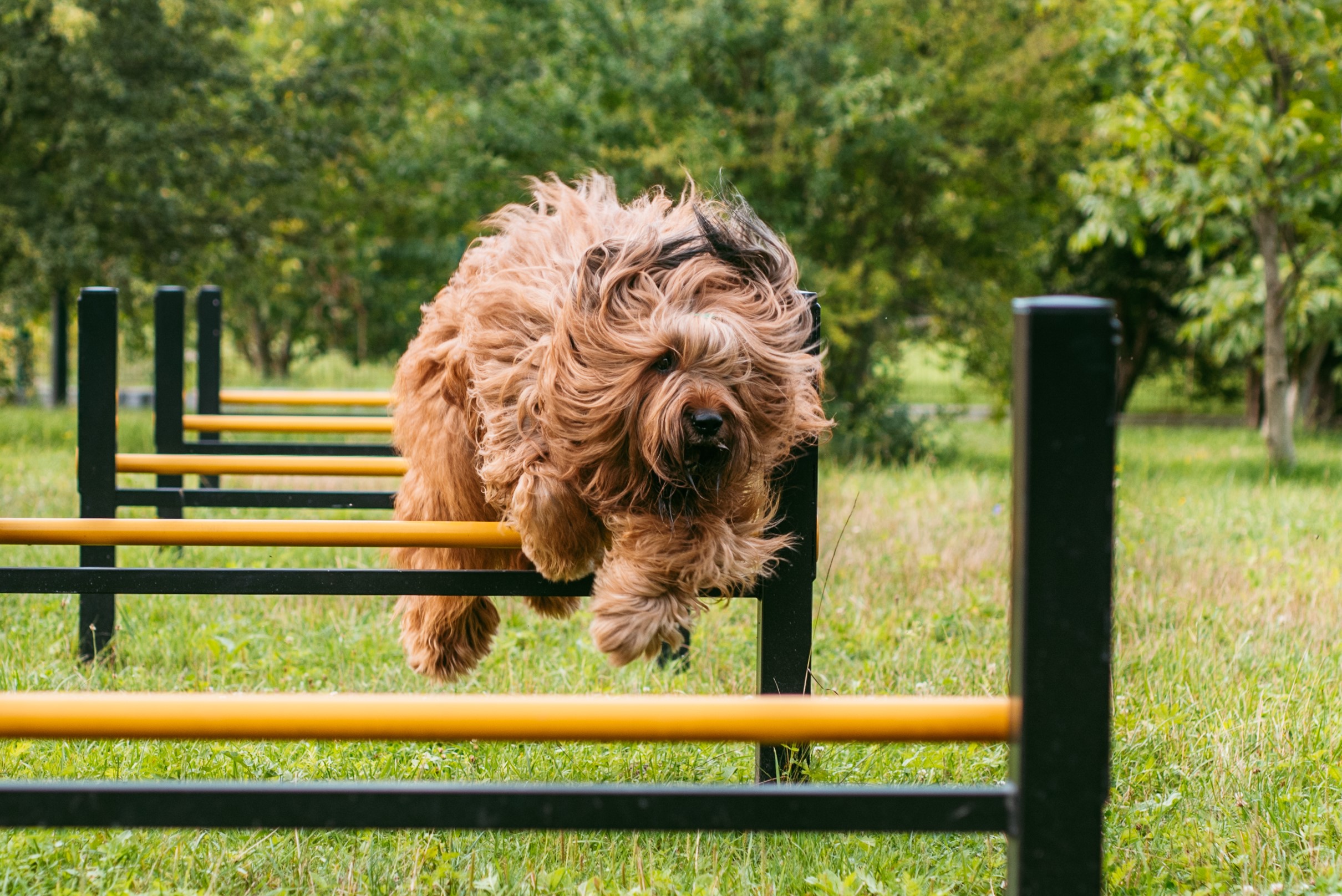
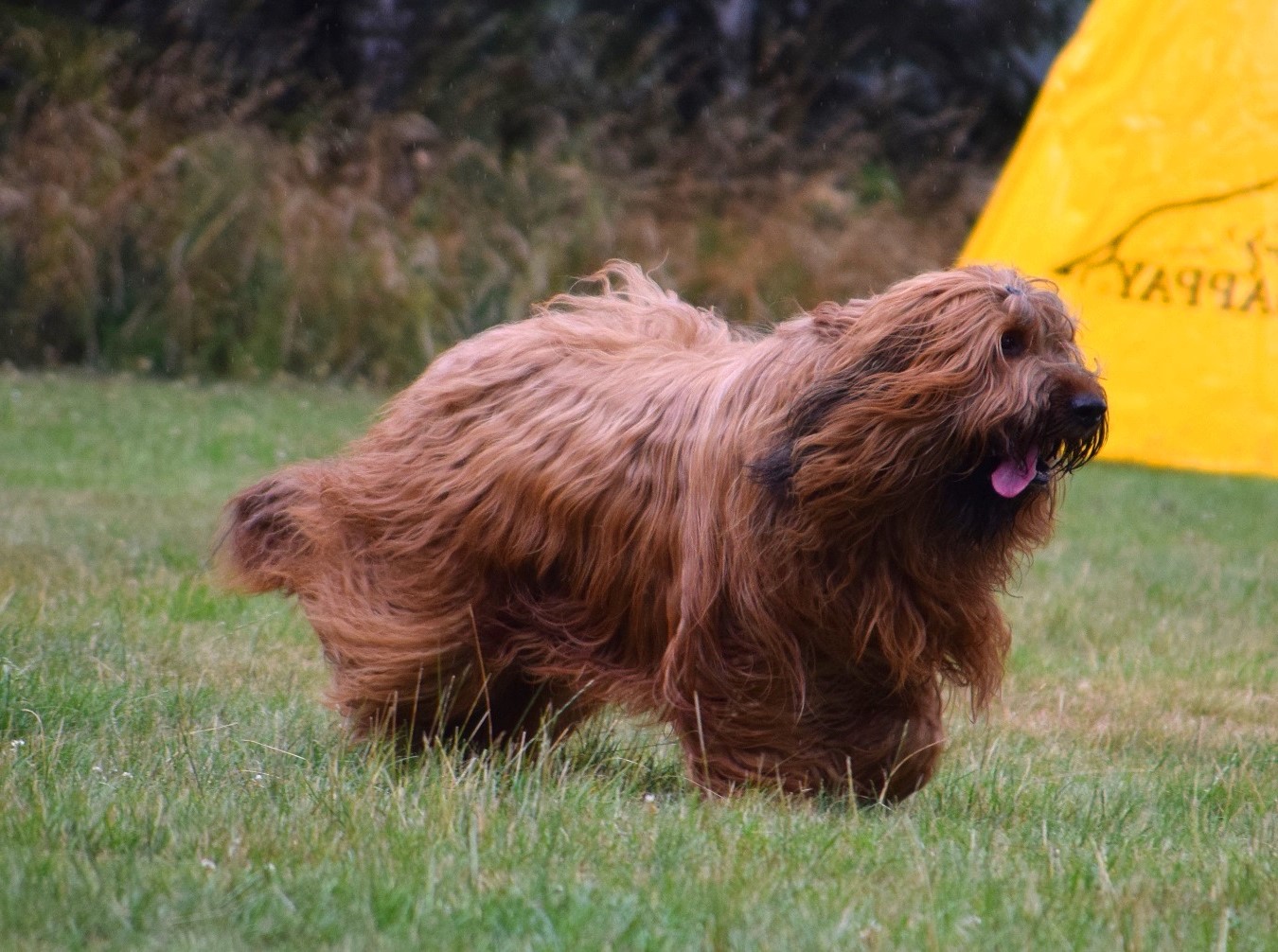
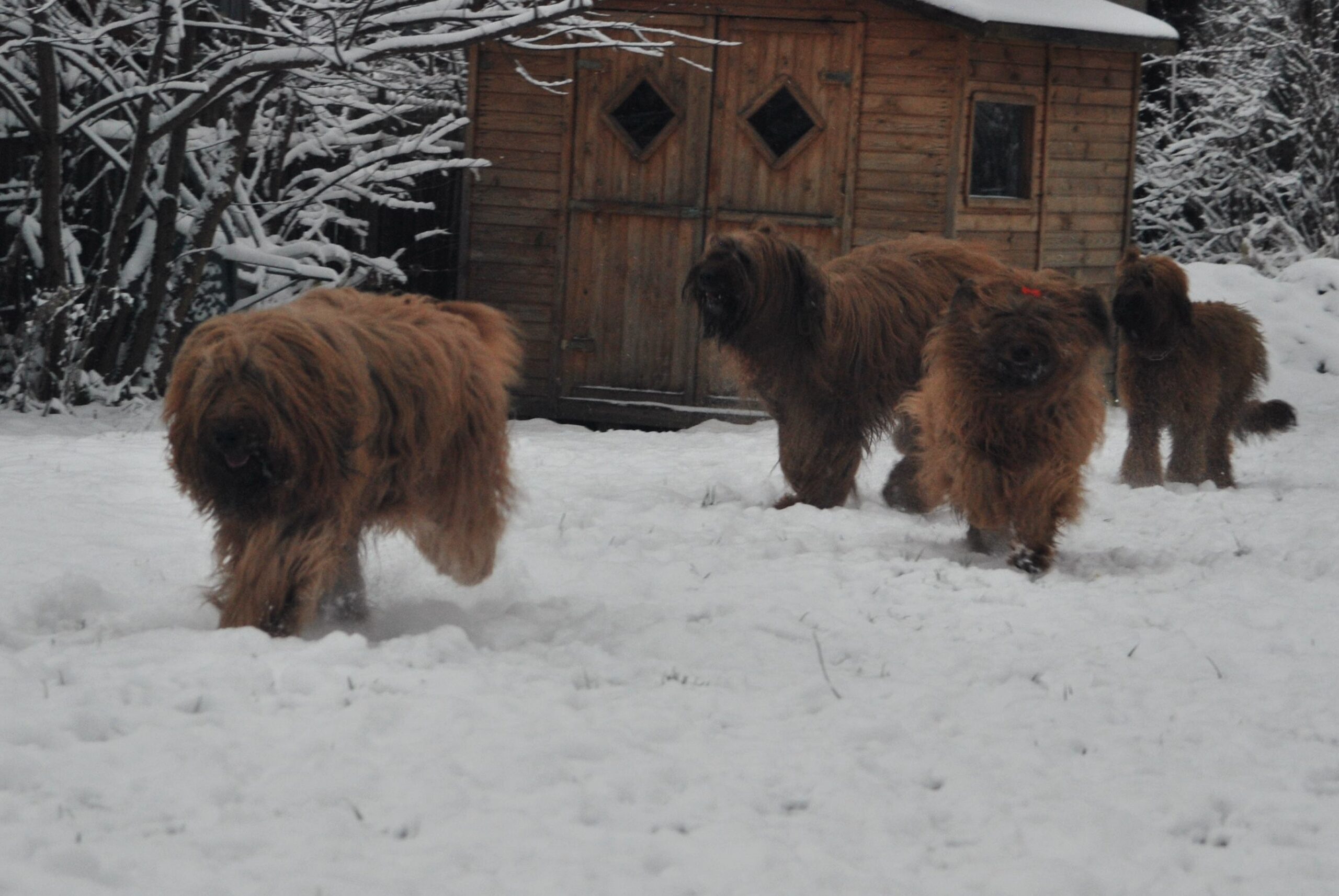
with a harmonious and strong structure. At the same time, it is not heavy and its silhouette fits into a rectangle. The dog’s height at the withers ranges from 62 to 68 centimeters. Females are slightly smaller and reach 56 to 64 centimeters at the withers. According to the standard, more important than the height itself is the proportion of the figure. The head is strong and long. The foot is clearly marked. The nasal truffle is large and black, except for blue dogs, where the color of the nose corresponds to the color of the coat or is in a shade close to it. Eyes fairly large and dark. In blue dogs they may be slightly lighter. Ears are one of the distinctive features of this breed. They are high set and heavily furred. The trunk is straight with strong and short loins. The chest is long and wide. The limbs are heavily muscled with strong bone. The tail is carried low, reaching at least the hock. Curled at the end, in a J-like fashion – in movement it should not be carried higher than the back line. The long hair on the muzzle forms a beard, mustache and eyebrows, which slightly overlap the eyes. The French Shepherd briard must have wolf claws, otherwise known as spurs – interestingly with other breeds this is considered a disadvantage, but in the Bard the disadvantage is their absence. Double wolf claws on the hind feet are necessary.
BRIARD'S LOOK
According to the pattern
a dog that lacks at least one spur cannot be rewarded or allowed to breed. The striking coat of the French Shepherd Briard is undoubtedly one of its greatest assets. The double-layered coat consists of long and slightly wavy, dry to the touch hair and not too abundant undercoat. The minimum length of the hair is seven centimeters. The French Shepherd briard should have a coat of gray (blue), black or fawn. Lighter shades of belly and limbs are acceptable.
About the Breed
INDEPENDENT MERRY-MAKER - THE CHARACTER OF THE FRENCH SHEPHERD BRIARD
The French Shepherd briard is a gentle, sensible and playful dog. He is eager to play together, which is a good time for him to discharge his pent-up energy and spend time together with his owner. Like all other herding dogs, these dogs have a strong and quite independent character. The dog sometimes had to make decisions on its own if the owner was not around. This combination of courage and independence has remained with these dogs to this day. For mental balance, the French Shepherd Briard needs close contact with its owner. It willingly accompanies its loved ones in all activities. It is an affectionate and sensitive breed. Deprived of physical as well as mental contact, it can become frustrated, which can take a toll on its psyche and behavior. Definitely, the French Shepherd Briard likes affection and closeness, so it does not tolerate loneliness very well – if we want the dog to stay alone for not too long then it must be used to it from a young age.
The French Shepherd briard is a good watchman who will guard both the property and the owner. In case of danger, he will not hesitate to stand up for his loved ones. He is not prone to destruction unless his needs are not guaranteed then he can discharge his energy on objects in his environment. The French Shepherd briard is completely devoid of aggression. He does not manifest it both towards people and other animals. He will easily communicate with other pets, especially if they grew up together. French Shepherd briard can live under the same roof with cats and other dogs, o has been subjected to proper and early socialization. It should also be borne in mind that this breed likes to bark.
Towards unknown people, the French briard sheepdog keeps its distance. It carefully observes newly met people, assessing whether the closest is safe. It is worth remembering that it is the dog that should be the first to break the proverbial ice and accept new people. Never be too confident in approaching a dog and trying to establish a relationship with him, as this may be taken badly by him. In relation to children, these dogs are very protective and gentle. They are cheerful and very eager to play. Due to the size of the four-legged dog, it is worth keeping an eye on the dog’s pranks and children, so that during the joint follies he does not inadvertently cause harm to the kids.
About the Breed
EDUCATION AND TRAINING - DEMANDING STUDENT
The French Shepherd briard is a very intelligent dog, which needs patient training. He is courageous and is not afraid to take on new challenges. He is eager to please his owner by inventing behaviors that the owner can appreciate. Training a briard should be based on positive methods, that is, praise, not punishment. Treats, praise or playing with a beloved owner is something every four-legged dog deserves after a task well done. A badly treated or chastised French Shepherd briard may shut down and refuse to cooperate further, or even remember such treatment for a long time. Training a dog requires a great deal of attention and an appropriate amount of dedicated time. The owner should be characterized by consistency, patience and self-control, but also gentleness and willingness to work with his four-legged friend. Very important is the relationship that is formed between the owner and the dog. It is the caregiver who should be the basis of any pet’s value pyramid. This takes time, but the result is definitely worth it. Like all herding dogs, the French Shepherd Briard can be quite stubborn. Patient and consistent training is essential. The French Shepherd briard is sensitive and affectionate, so learning should be done in a friendly atmosphere for a four-legged friend. He is a real volcano of energy, so exercises should be as varied as possible to maximize his attention. The owner should be aware that this breed matures quite late. Maturation lasts until about three years of age, and until then the French briard sheepdog often behaves like a puppy. Raised will be balanced and composed, and when given the
INEXHAUSTIBLE VOLCANO OF ENERGY
Shepherd dogs should have properly selected activities,
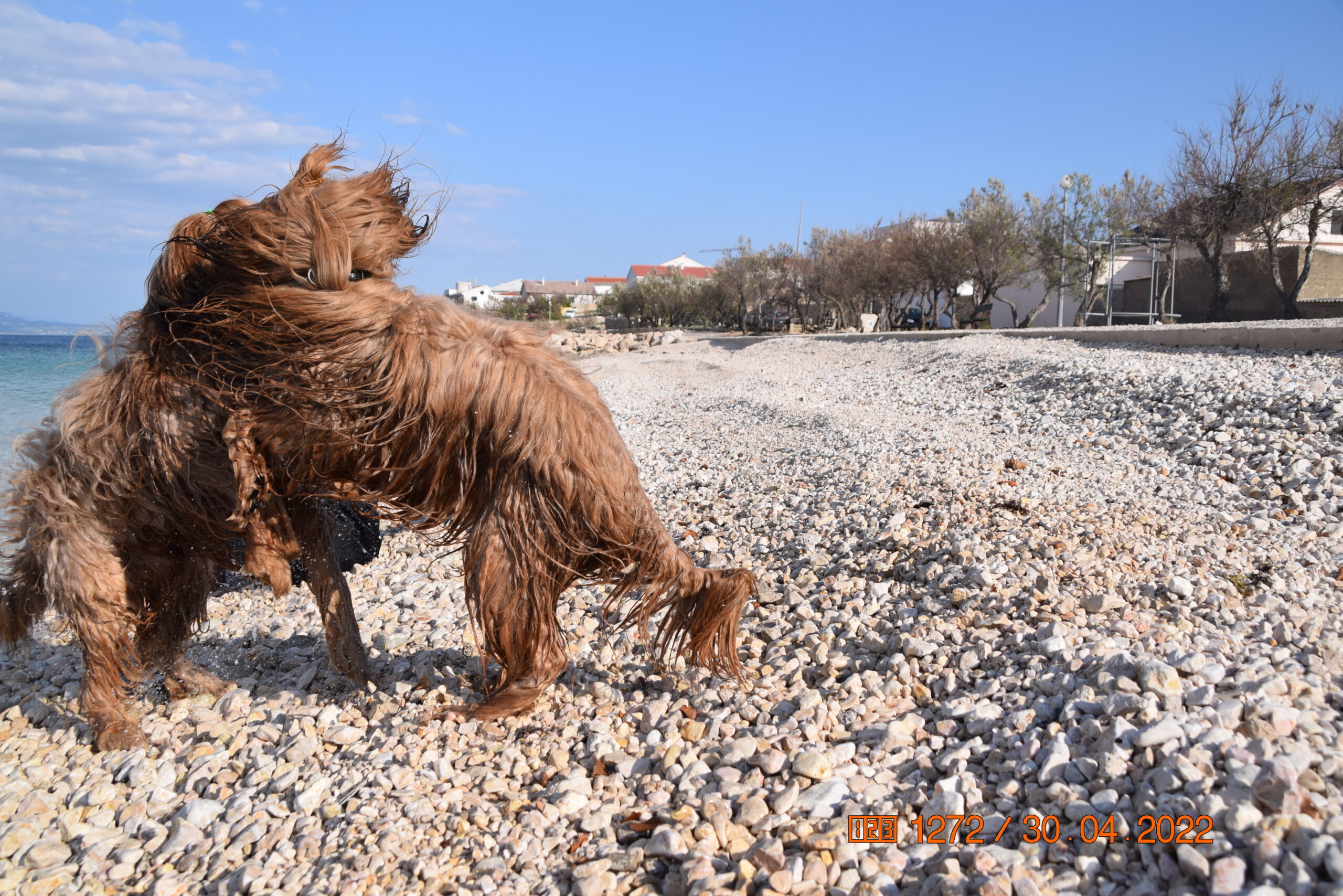
thanks to which they feel psychologically fulfilled. The French Shepherd briard enjoys any kind of activity – he will not refuse fetching or water activities. He will do well in dog sports such as agility, tracking or flyball. He should not be allowed to get bored. Providing an adequate dose of exercise during the day is essential to maintain not only proper fitness, but also the mental health of the four-legged dog. This breed has innately excellent attributes of a guard dog, which are worth using during daily training. Educational toys and games that stimulate the mind will certainly appeal to this sheepdog.
The French Shepherd briard will gladly accompany its owner in all sports. However, it is worth remembering that the puppy should not be pushed too hard in order not to damage the osteoarticular system, which could affect the proper development. Therefore, the amount of activity should be gradually increased, starting with those not too demanding.
SOCIALIZATION - THE BASIS OF ALL BEHAVIOR
Early socialization shapes a dog's character,
as well as its later behavior. Thanks to socialization, the dog will become familiar with his surroundings, other animals, or people previously unknown to him. This will get rid of any anxiety that might accompany it. Early socialization also includes learning new sounds, so that when the vacuum cleaner or dryer is turned on, the pet will not be stressed. This is a very important period that strengthens the bond between owner and pet, and also builds confidence in the dog, which is crucial for him in the later stages of life. An excellent place where the dog will be able to learn basic commands, as well as get acquainted with different dogs or surrounding sounds, is a doggy daycare center. This is a very convenient solution, and more and more owners are opting for training under the guidance of an experienced trainer.

About the Breed
PROPER DIET
Proper nutrition is very important, as it not only affects the overall well-being of the four-legged dog, but also affects its health. The diet should be arranged for each dog to take into account its individual needs. Age, weight, physical activity or afflicting diseases are factors that absolutely must be taken into account. A French Shepherd briard can be fed naturally with barf, preparing his meals at home on his own or feeding him ready-made food – dry as well as wet.
Of course, there is no single best way of feeding. It is best to choose a form that will suit the owner, as well as appeal to the pet. Home preparation of meals is problematic insofar as it requires quite a lot of knowledge about the proper composition of food. It is necessary to take into account the individual needs of the four-legged dog, properly select the nutrients and calorie content of the food. Therefore, it is worth going to a dog nutritionist or veterinarian, who will help to arrange a suitable diet.
It is important to remember that a diet devoid of important nutrients can lead to many serious health complications. A convenient solution is ready-made foods, both dry and wet. The big advantage of these foods is the ease and speed of administration. Of course, the composition is crucial. It is best to choose those with a high content of good quality meat and vegetables. In the case of the French Shepherd briard, a good choice is age-matched dog food for large breeds, in which the size of the crunches and the nutrients they contain are balanced so as to provide the dog with everything it needs on a daily basis.
The number of meals changes with age. Puppies should get smaller portions of food 4 or even 5 times a day. Adolescent dogs 3 times a day, and adult dogs 2 meals a day. The regularity of meals is also important. It allows the body to “teach” the feeding times and has a beneficial effect on the four-legged dog’s digestion. This breed, due to its size, is exposed to stress on the joints, so it is worth enriching the food with supplements that will further protect them. The appearance of hair and its condition will benefit from biotin, zinc and unsaturated omega-3 and -6 fatty acids, which further strengthen the immunity of the quadruped. Home meals should be enriched with appropriate calcium and vitamin supplementation. Any such supplement should be consulted in advance with a veterinarian. In addition to food, clean water is also important to hydrate the body of your four-legged friend. A French Shepherd briard should have constant access to fresh drinking water, changed at least once a day.
About the Breed
HEALTH - PREVENTION FOR A LONG LIFE
The French Shepherd briard enjoys good health, but is prone to some diseases afflicting medium and large dogs. One such disease is gastric torsion. Fortunately, this disease can not be avoided, thanks to proper care of the four-legged dog. It is very important to divide the daily portion of food into several smaller meals, after which it is mandatory for the pet to have a guaranteed rest so that it can digest in peace. The quadruped must not then be exposed to physical activity. This must not be underestimated, as gastric torsion is dangerous even to the life of the pet. A disease with a genetic basis is hip dysplasia. This is also an affliction of large dogs, so it is the responsibility of breeders to carry out tests in the kennel, which can exclude the risk of occurrence and inheritance of this disease in a given litter. A score of A means a dysplasia-free dog. French Shepherd briards can also be plagued by eye diseases such as progressive retinal atrophy (PRA) or congenital nonprogressive night blindness (CSNB). In Poland, with this breed, there is no obligation to test for this condition in breeding, but due to the risk of this disease, many breeders choose to do it themselves. Due to the characteristic structure of the ears of the French briard sheepdog, it is prone to ear infections. Fortunately, with proper prevention, these diseases can be avoided. As with any other dog, you should also watch out for external parasites – fleas ticks and even mosquitoes. A well-groomed French Shepherd briard lives to an average of about 13 years, which is really not bad.
About the Breed
UNCOMPLICATED BUT SYSTEMATIC GROOMING OF THE FRENCH SHEPHERD.
The French Shepherd briard is a dog with long hair, which is undoubtedly one of its most distinctive features. Fortunately, keeping it in top condition does not require special grooming, but you need to be systematic. The frequency of treatments primarily depends on the structure of the hair and the quality of the hair. For this it will be necessary to get several brushes, each of which has a different task. A bristle brush, a wire brush without hoods, a metal comb with not too dense needles and a comb will be useful for briard combing In addition, it is worth getting clamps that will make it easier to support the hair, so that the dog can be combed out layer by layer. Goat hair should be combed once every week and a half or so. Soft hair requires more frequent combing, as it likes to tangle and felt. It is best to observe the coat and increase the frequency of combing if tangles occur. Combing this breed usually takes one to two hours for an adult dog, so it is worth being systematic.You should always comb with the hair.Before combing, it’s a good idea to spray the French Shepherd briard with a conditioner that makes combing easier, and check the coat with your hands and get rid of large tangles by gently combing them out, so as not to cause additional pain to the pet.Getting used to combing should start as early as possible, around 2-3 months of age.It is best to do it after a walk or playtime, when the pooch is tired.At this stage of life the hair is short, but it is important to gain the confidence of the four-legged dog.
In addition to combing, bathing is also important.Before bathing, the dog should be thoroughly combed – do not bathe a mangled pet.For bathing, we use shampoos designed for terriers or long-haired breeds, or those tailored to the current needs of the hair – a shampoo for puppies in puppyhood, a therapeutic shampoo in case of skin diseases, or a regenerating shampoo if the condition of the coat is in poor condition and the hair is dull.After bathing we use conditioners, which after application should be washed off thoroughly.When washing, be careful not to pour water into the ears and eyes of the pet.
Regular care should also be given to ears and eyes, claw length or oral hygiene.Usually dogs rub off their claws naturally, but when this does not happen they should be gently trimmed.Wolf claws do not rub off naturally, so they need to be trimmed.The ears and eye area should be checked and flushed once a week.Ears may need to be flushed more often. Taking care of the teeth is a very important aspect of pet care. Tartar buildup can cause ill health and even severe disease. Regular teeth brushing, giving dental chews, or additives to food and water should be a daily part of caring for your pet’s well-being.
In addition to taking care of the four-legged dog itself, its diet and appearance, it is also important to provide it with the necessary accessories to make everyday life together easier. A collar and leash is the first item on the list.For the French Shepherd briard, a good quality round-stitched clip collar works well.The type of leash, as well as its design, is the owner’s choice.A leash with adjustable length is the best choice for large dogs.Such leashes are adapted to the size of the four-legged dog, corresponding to their kilograms, and also provide comfort of movement, and importantly – safety.
The dog bed, which is the four-legged dog’s own place to sleep, should be appropriately selected for its size. Often our four-legged friends choose the floor to chill, or the couch and a place next to the owner, but it is good for the dog to have its own place to rest. Equally important are good quality food and water bowls. They should be made of good materials and be the right size.
The French Shepherd briard is a lively breed that will not refuse any fun. Between walks, it is important to provide them with additional entertainment. Toys should be durable and of good quality, otherwise they may only serve for a while. It is necessary to choose them according to the size of the dog – too small could swallow.
The size of the French Shepherd briard makes it somewhat difficult to transport it. If our vehicle is a passenger car, we can opt to purchase a car mat mounted on the rear seat and attach the dog to the seat belt slot with special connectors clipped to the harness. If you transport your dog on public transportation, a muzzle will be necessary.
The briard’s coat requires regular grooming, and for this you will need tools and preparations to take care of your pet’s hair.
PURCHASE ONLY FROM RESPONSIBLE BREEDING
When deciding to buy a dog, you need to know the specifics of the breed,
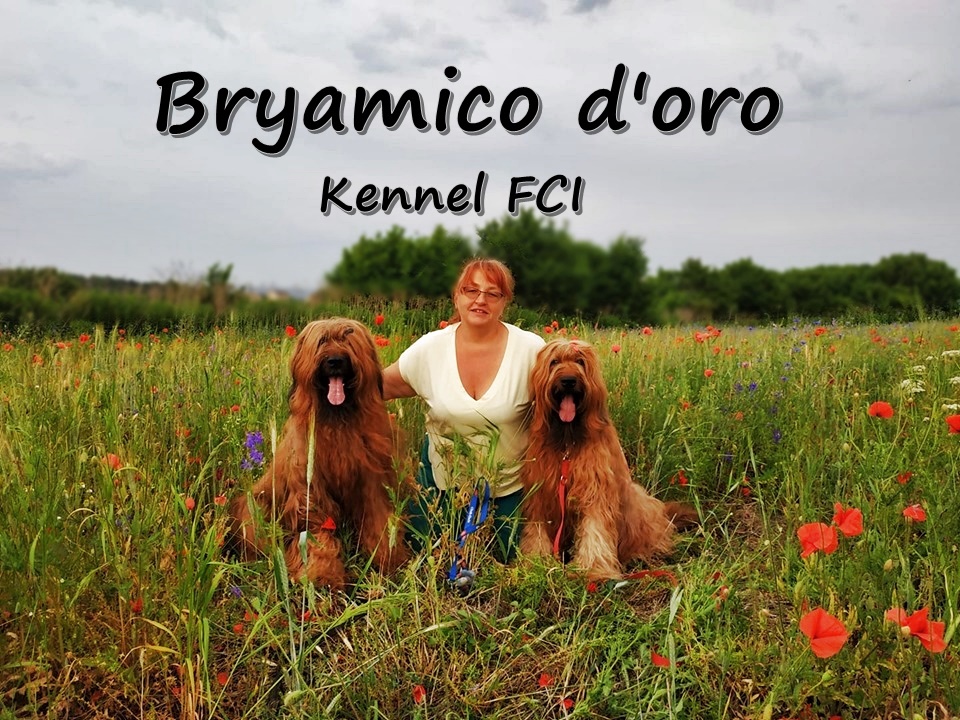
to know whether you will meet its requirements. The French Shepherd briard is a lively dog that needs a daily dose of exercise and contact with its guardian. It is very important to choose the right kennel. Many people choose to buy a purebred dog without papers, explaining that they are not buying a show dog, but only a family dog, or have limited funds. This is a big problem that legal breeders have been fighting for years. We must remember that there is no purebred dog without a pedigree from the Kennel Club (or FCI). It is the pedigree issued by these organizations that confirms that the dog belongs to a particular breed. A dog without a pedigree is not a purebred dog, but only in the breed type, or simply a mutt. When buying a purebred dog from a Kennel Club kennel, one gets certainty about the characteristics of the dog’s character, as well as its health, appearance or early socialization. Such kennels operate in a strictly defined manner and follow top-down rules.
WHAT KIND OF OWNER DOES A FRENCH SHEPHERD BRIARD NEED?
The French Shepherd briard is a family and sociable dog
that needs the proximity of its owner for happiness and mental balance. It is not a breed with high housing requirements. Briard will find itself in a house with a garden, as well as in a small apartment as long as their activity requirements are met. The owner of this beautiful dog should be consistent and patient, as well as devote his time to its proper upbringing. The French Shepherd briard will find itself by the side of families with children, as well as single people, while due to its high activity requirements, it is not a good choice for the elderly or busy people.
The key to gaining a faithful friend is to understand the nature of these dogs, as well as to take the time to nurture and systematically care for them. If we show him affection and care then the French Shepherd Briard will more than repay us for the love shown to him.